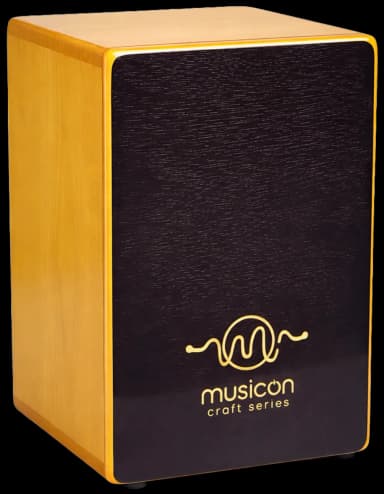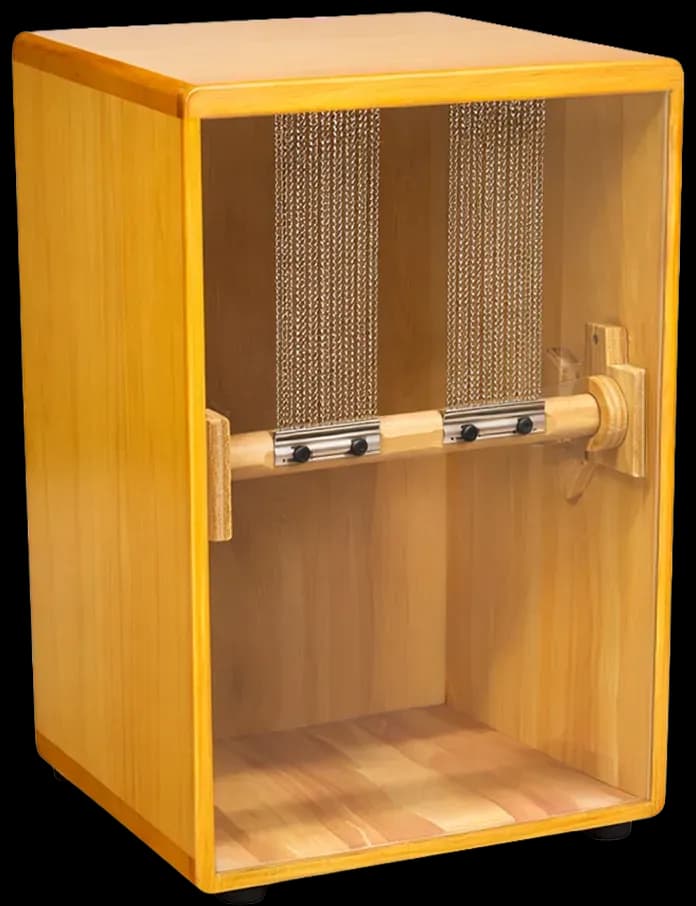
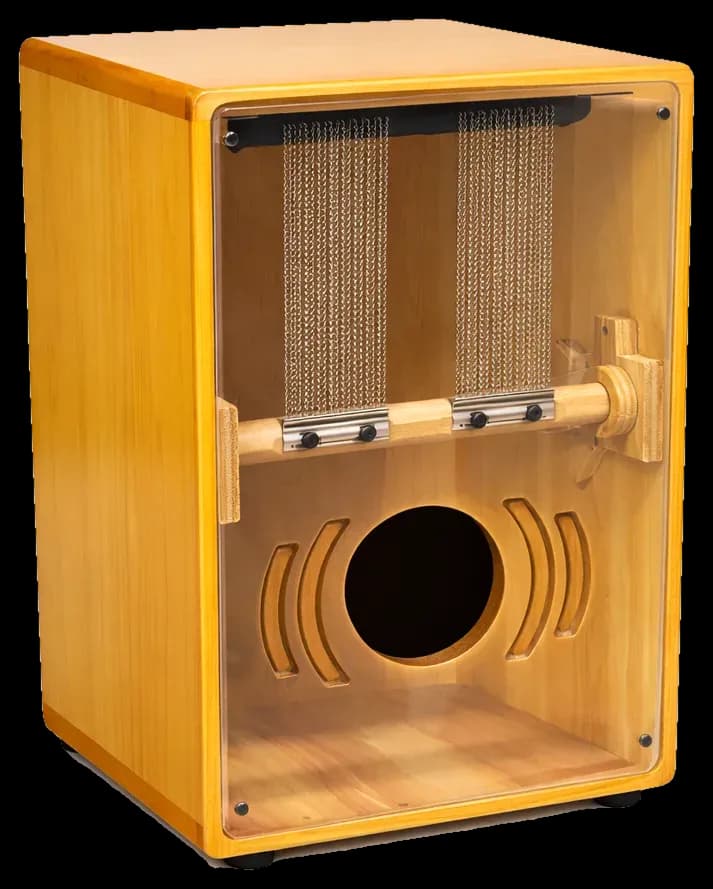
Most of the repairs that reach our bench were not caused by playing. They were caused by where the box spent the monsoon. Wood takes on moisture from the air, swells, and pushes against whatever is holding it — and a cajon is a box of panels holding each other.
What actually causes damage
Standing damp is the enemy: a floor that stays wet, a wall that sweats, a car boot in July. Direct sun is the other one — it dries the outer face of a panel faster than the inner, and the panel cups. Neither takes an afternoon to do harm; both take weeks. The lacquer slows moisture down, it does not stop it.
What does nothing at all
Playing in humid air. Sweat on the tapa. The weather being the weather. A cajon is furniture-grade construction; it does not need a dehumidified room, it needs to not sit in water. Wipe the faceplate with a dry cloth now and then and the finish will outlast your interest in this paragraph.
The five-minute habit
Keep it off the floor on its rubber feet, a hand-span from outside walls, out of direct sun. After a wet gig, let it dry in the room air — never in front of a fan heater, never in the sun. If the snare starts buzzing against the tapa as the seasons change, that is the wood moving as designed; on the adjustable models a quarter-turn of the knob settles it.
And if something does crack, photograph it and message us. Repairs are priced at materials and bench time — we do not make money on your bad luck, and we would rather see it early.