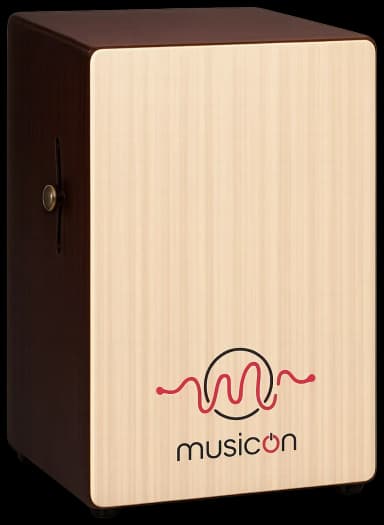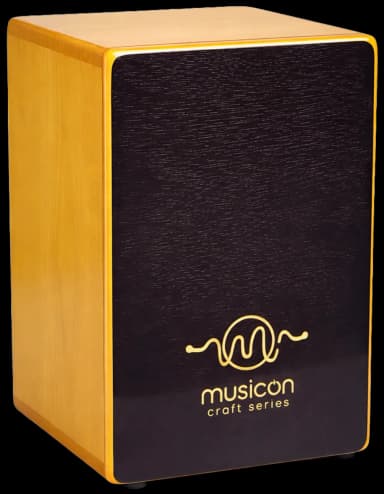
The easiest way to hit a lower price on a cajon is to cheapen the part the customer cannot see. Fit brass instead of steel, twelve strands instead of twenty, and the box still looks identical in a photograph. It just stops sounding like one of ours after a monsoon or two.
What the snare actually does
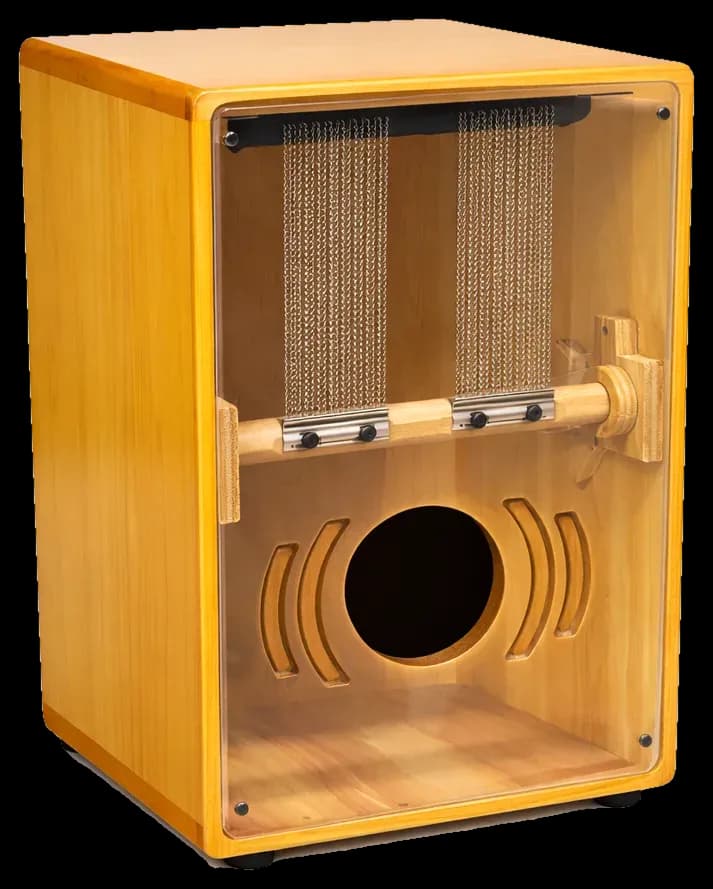
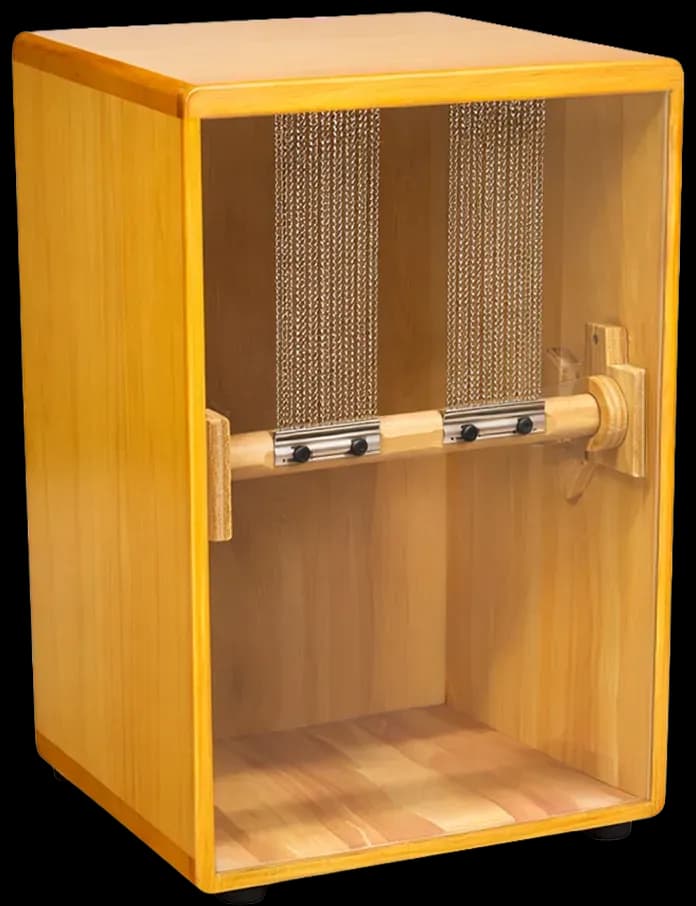
The snare wires sit against the back of the tapa and turn a hand-slap into that crack a cajon is bought for. Cheap wire loses tension and brightness as it fatigues; the slap goes dull and the buzz creeps into notes that should be clean. It is the single part where material quality is most audible — which is exactly why it is the usual place to save money.
One standard, no tiers
So the rule at our bench is boring: every box, every series, the same pair of premium-grade 20-strand steel wires. The Classic’s pair is fixed in place; the other series put the same steel on an external tuning knob. What you pay more for is the body wood and whether the snare adjusts — never whether the snare is any good.
We do not fit a cheaper snare to a cheaper box. The price difference is the wood, not the standard.
It is the slowest station in the workshop: the wires are positioned against the tapa a fraction of a millimetre at a time, played, adjusted, played again. The tapa itself is set at the bench with no visible screws — nothing to work loose, nothing for a knee to find. That patience is the same on a Classic as on a Craft, and it is why we can put the same warranty on both.