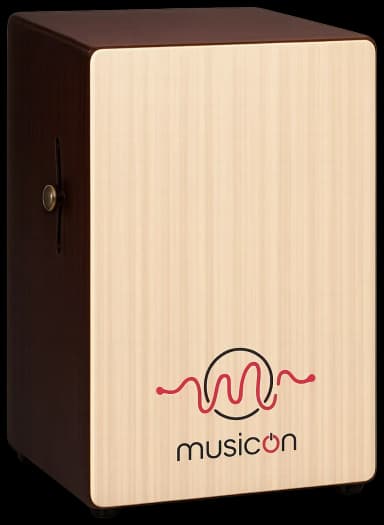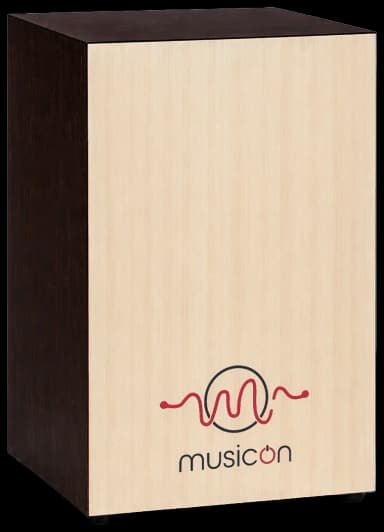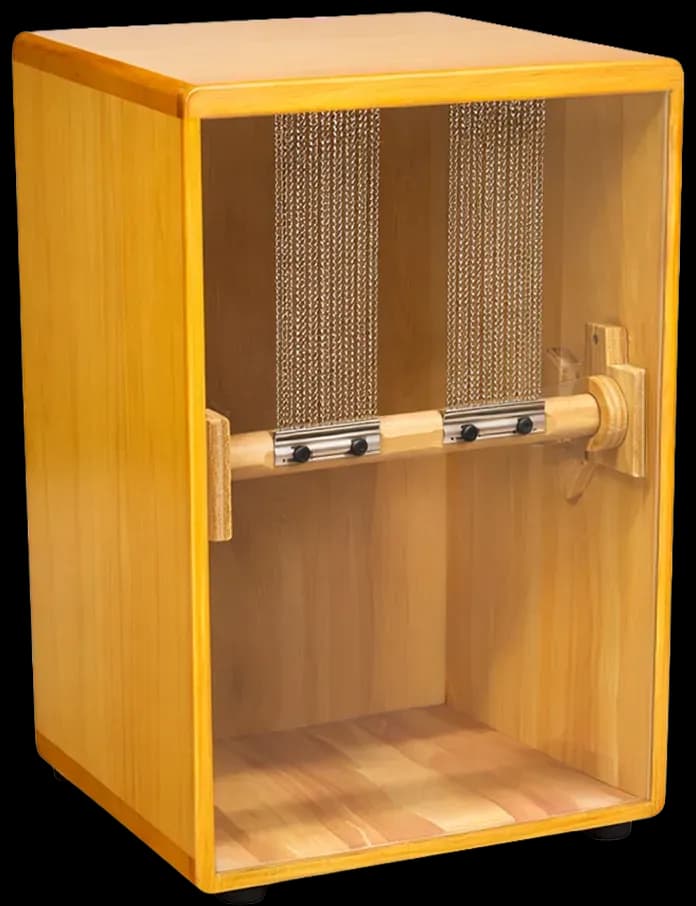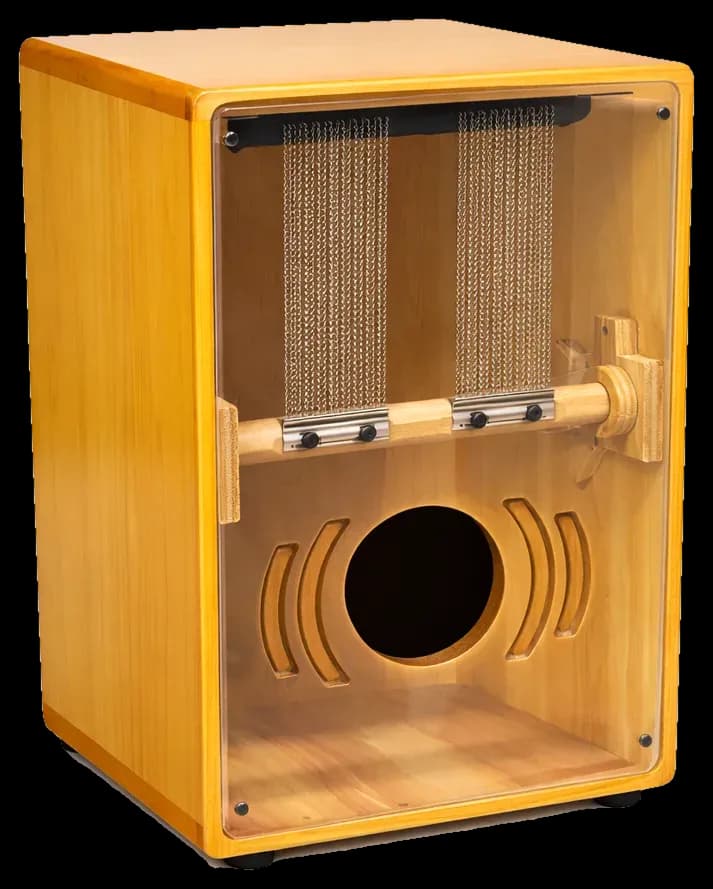

People arrive at our workshop with the same worry: that there is a wrong cajon to buy, and they are about to buy it. There is not. Every box we make is a real instrument with the same steel snare wires and the same person checking it before it leaves. What differs is the body — and one decision about the snare.
The one decision that matters
The Classic has a fixed snare: both wires are set at the bench and stay there. Nothing to adjust means nothing to drift, which is exactly what you want if the box lives in a rickshaw, a classroom or a church. Every other series has an external knob that moves both wires while you play — from a dry, woody snap to a bright sizzle. If you do not yet know which sound you want, the knob is how you find out.
Ply is not the compromise it sounds like
The Classic and Creative are 12mm Gorjon plywood — the Creative in the denser Super Gorjon grade. In this climate that is a feature, not a saving: ply shrugs off the humidity swings that move a solid panel, and at about 4kg it goes on the back of a bike without argument. The Creative is the one we hand to students, and the one that keeps turning up on stages years later.
What the extra money buys
The Craft Series is solid pinewood. The bass note blooms slower and hangs longer — you feel it in your chest before you hear it in a recording. The Custom Series is the same bench letting you choose the wood and add a built-in pickup or a padded seat. Neither makes the ply boxes obsolete; they are for players who already know the low end has to carry a room.
Buy the box you will actually carry to rehearsal. The best cajon is the one that leaves the house.
Still unsure? The workshop in Rajshahi is open to visitors — call ahead and play all four side by side. Ten minutes of sitting on them answers more than any guide.